Conductive Polyolefin Foams: The Science Behind Reliable ESD Protection
Explore the challenges of producing electrically conductive polyolefin foams and how optimized formulations help ensure reliable electrical and mechanical performance.
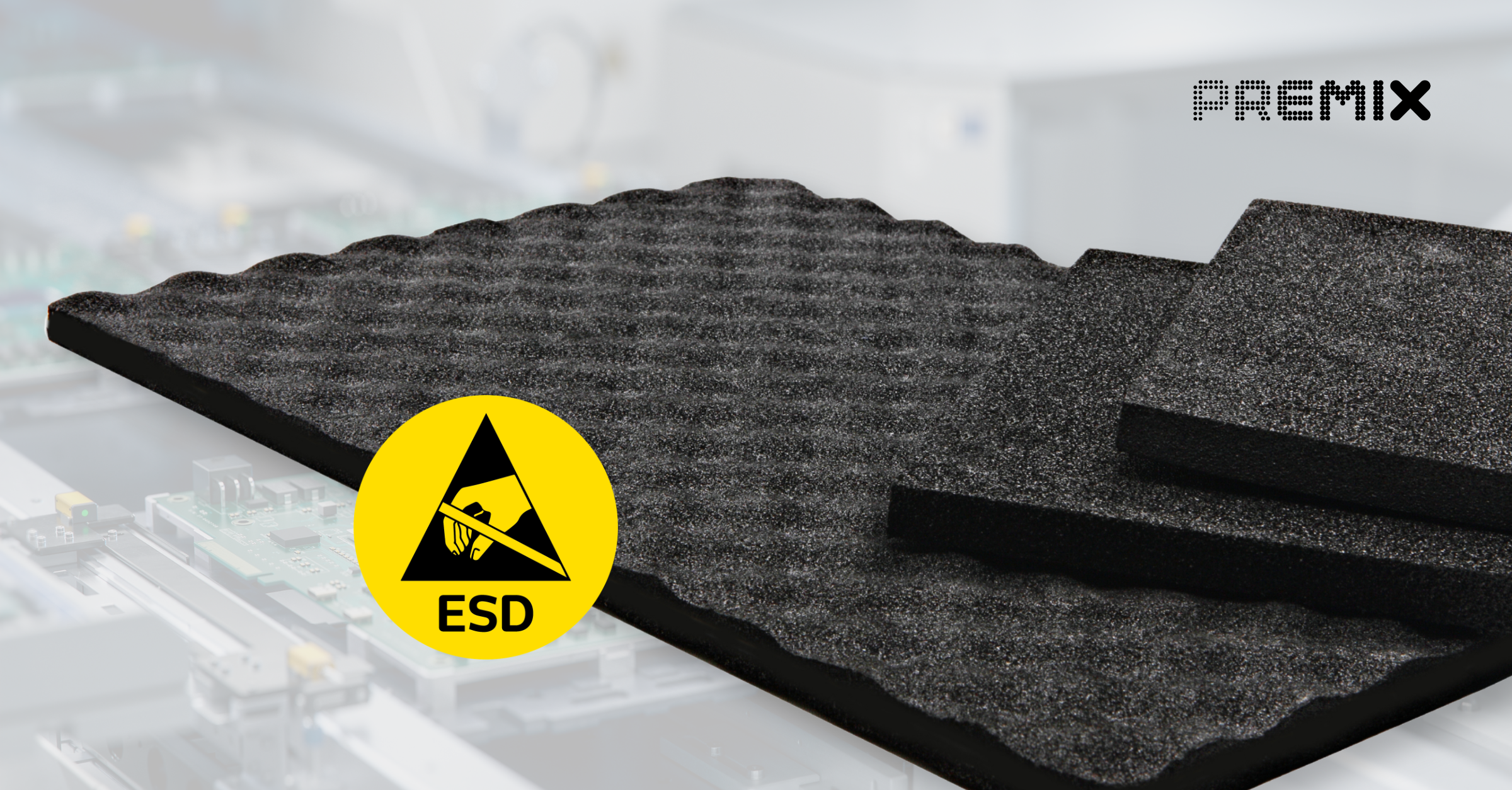
Lightweight, durable, and highly protective, conductive polyolefin foams are becoming an increasingly important material choice in applications where electrostatic discharge (ESD) protection is essential. From electronic component packaging and automotive electronics to defense, safety equipment, and industrial applications, manufacturers are looking for foam materials that combine reliable conductivity with good mechanical performance.
Yet producing electrically conductive foam is far from straightforward.
Unlike conventional foams, conductive formulations must maintain a continuous carbon black network while the material expands into millions of microscopic cells. Achieving the right balance between conductivity, foam structure, and process stability requires both material expertise and process optimization.
Why conductive foams are technically demanding
Electrical conductivity in polyolefin foams is typically achieved using conductive carbon black. While carbon black creates the conductive network needed for ESD protection, it also changes how the polymer behaves during foaming.
Carbon black reduces the melt strength of the polymer, making stable cell formation more difficult. As the foam expands, the conductive carbon black network is stretched and the distance between particles increases. If the formulation and processing conditions are not carefully optimized, this can lead to reduced conductivity or inconsistent electrical performance.
Conductive foam formulations also often have a narrower processing window than non-conductive foams. Manufacturers may encounter challenges such as reduced melt strength, cell collapse, irregular cell structure, conductivity variation, or process instability during scale-up.
In chemically crosslinked foam production, the crosslinking reaction helps improve melt strength and foam stability, supporting more controlled cell formation and more consistent electrical performance.
Every foam process is different
One reason conductive foam development is so application-specific is that there is no single manufacturing route.
Foam manufacturers use different polymers, blowing agents, peroxide systems, antioxidants, and production technologies depending on the end application. As a result, conductive concentrate solutions must be compatible with each individual process.
Premix provides electrically conductive concentrate solutions for a wide range of polyolefin foam manufacturing technologies, including:
XLPE foam production
For chemically crosslinked foam made by block foam or continuous sheet extrusion processes. For example,
PRE-ELEC® PE17800 is typically used at approximately 50% loading and diluted with LDPE or EVA.
EVA foam production
For applications such as block foam produced in batch processes. For example, PRE-ELEC® CP1515 is typically used at approximately 70% loading and diluted with EVA or LDPE.
PP and PE bead foam production
For bead foam processes followed by steam chest moulding. These applications often require
customized PRE-ELEC® grades developed together with the customer.
Rather than offering a one-size-fits-all solution, Premix works closely with foam manufacturers to develop conductive formulations that match their production process, additives, and end-use requirements.
Formulation and processing go hand in hand
Successful electrically conductive foam production is not only about selecting the right conductive material. Formulation design and process optimization work together.
Material selection influences processing behavior, while processing conditions determine the final foam structure and electrical performance. Finding the right balance can take time, but once the formulation and process are optimized, manufacturers benefit from a robust solution that supports stable production and long-term consistency.
Partnering from development to production
With more than 40 years of experience in electrically conductive plastic compounds and concentrates/masterbatches, we support foam manufacturers in developing conductive solutions for demanding applications. Our goal is to help customers find the right balance between electrical performance, foam structure, and processability.
Whether you are developing a new conductive foam or optimizing an existing production process, the right material partner can help shorten development time, improve process stability, and support reliable end-product performance.
Interested in conductive polyolefin foams? Let’s discuss your application and production process!
Explore Foam Materials
Our portfolio includes concentrates from polyethylene (PE) and ethylene-vinyl acetate (EVA). The dilution ratios can be adjusted based on specific conductivity targets and the compounds are suitable for both continuous foam and block foam manufacturing processes.
.png?width=450&height=325&name=Foams%20removed%20background(450x325).png)